Concrete Kerbs Frankston, Formed in One Clean Line
What Concrete Kerbs and Edging Are
Concreting across Frankston, the bayside suburbs and the northern Mornington Peninsula, with a fixed written quote on every job.
Concrete kerbs and edging are narrow, continuous concrete borders that hold the edge of a garden bed, lawn, driveway, path or car park in place and give it a clean, permanent line. Most residential kerbing is formed in place by a kerb machine that extrudes concrete through a shaped mould as it moves, so a long curved garden edge or driveway border is one continuous piece rather than a row of separate blocks. Peak Concreting Frankston forms garden edging, mower strips, driveway and path kerbs and car park kerbing across Frankston, Seaford, Carrum Downs, Langwarrin and the northern Mornington Peninsula. A kerb only stays straight and level if it sits on a compacted base and is supported behind, which matters on the loose sandy soils along the bay.
GET A FREE QUOTE
Peak Concreting Frankston
Concrete Kerbs Frankston: Garden Edging, Mower Strips and Driveway Kerbs
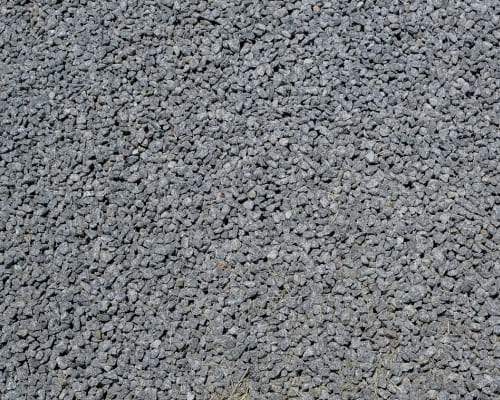
Concrete kerbs in Frankston are mostly laid around homes rather than on roads. The most common jobs are edging garden beds so mulch and soil stay in and lawn stays out, laying mower strips so the edge of the lawn can be cut without a whipper snipper, and kerbing the sides of driveways, paths and parking areas so the surface has a firm edge. Each one uses the same continuous-forming method, with a profile and size chosen for the job it does.
Garden edging and mower strips
Garden edging is the most requested kerbing job. A concrete edge keeps mulch, pebbles and soil in the bed, stops couch and kikuyu from creeping in, and gives the garden a crisp outline that lasts far longer than timber or plastic. A mower strip is a flatter, wider edge set level with the lawn, so one wheel of the mower can run along it and cut right to the edge. Both can follow curves as easily as straight lines, which suits the free-form gardens common around older bayside homes. Edging can be laid in plain grey or tinted to suit the garden, and a concrete path can be edged in the same pour.
Driveway and path edge kerbs
A kerb along the side of a driveway or path gives the edge something to bear against, stops the surface spreading or crumbling at the sides and keeps vehicles off garden beds and lawn. Kerbs are common beside gravel, crushed rock and paved driveways, where the edge would otherwise wash or wander, and beside new concrete driveways as a finishing border. On sloping blocks a raised kerb can also help direct stormwater down the driveway to a drain rather than across the garden.

Peak Concreting Frankston
Kerb Profiles: Flush, Edge Strip, Barrier and Layback Kerbs
A kerb profile is its cross-sectional shape, and it decides what the kerb does: sit level so it can be driven or mown over, stand up to stop vehicles and water, or slope so cars can roll across it. Kerb machines use interchangeable moulds, so the profile is chosen to suit each edge of a job. Using the wrong profile is a common mistake, such as a high barrier kerb where a mower needs to pass or a flush edge where water has to be held back.
Flush and edge strip kerbs
A flush kerb sits level with the surface beside it, so it can be driven over, walked across and mown over without a step. An edge strip kerb is a narrow flush or slightly raised strip used to restrain the edge of a paved, gravel or asphalt surface and to separate it neatly from lawn or garden. These are the profiles used for most garden edging, mower strips and driveway borders, because they define the edge without creating a trip hazard or an obstacle.
Barrier and semi-mountable road kerbs
A barrier kerb has a near-vertical face that stops vehicles and channels stormwater, and is used on roads and car parks where vehicles must be kept off a footpath or landscaped area. A semi-mountable kerb has a sloping face that a vehicle can climb over at low speed when needed, which is common on estate roads and around car park islands. Both are often formed with an attached channel, called kerb and channel, that carries water along the road edge to the drains.
Layback and drop kerbs at a crossover
A layback kerb has a shallow sloping face that cars can drive across comfortably, and it is the profile used where a driveway crosses the kerb line to meet the road. A drop kerb is a section where the kerb is lowered to road level for vehicle or pram access. Kerbs on public roads in Frankston City and the Mornington Peninsula Shire belong to the council, so creating or altering a crossover there needs council approval and must follow the council's standard drawings.
Roadside kerbing on private roads, estates and car parks
Roadside kerbs on public streets are council work, but private roads, shared driveways in unit developments, school and church car parks, and small commercial sites all need kerbing that is built on private land. Typical jobs include kerbing around car park islands and bays, separating a car park from landscaping, and forming kerb and channel along a private access road so stormwater runs to the pits. These use the same barrier, semi-mountable and layback profiles as road kerbs, laid to the site's drainage design.
Peak Concreting Frankston
How Kerbing Is Formed: Slip-Form Machines, Haunching and Joints
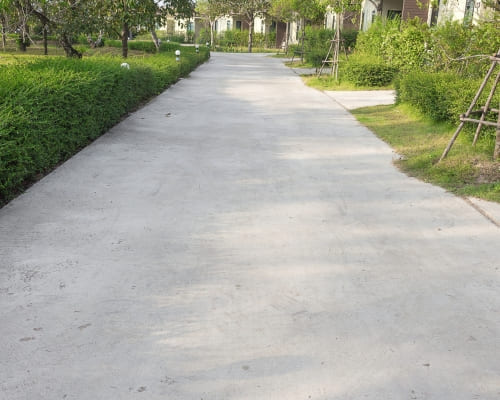
Kerbing is formed by a slip-form kerb machine that is fed with a stiff concrete mix and extrudes it through a shaped mould as it moves forward, leaving a continuous kerb behind it. The method is fast and produces a kerb with no joins between blocks, but the result depends on what happens before and after the machine passes: the preparation of the ground beneath, the support behind the kerb and the joints cut along it.
Continuous kerbing from a kerb machine
The line of the kerb is set out first with string lines or paint, following the curves of a garden bed or the straight edge of a driveway. The ground is excavated to a firm, level base, and on soft ground a layer of compacted crushed rock is added. The kerb machine then travels along the line, extruding the chosen profile in one continuous run, and the surface is finished by hand. Because the concrete mix is stiff enough to hold its shape immediately, no formwork is needed, which keeps the cost per metre down.
Haunching the back of the kerb
Haunching is concrete placed along the back of a kerb, sloping from the top of the kerb down to the ground, to support it against being pushed outwards. It matters most for kerbs that restrain a surface, such as pavers or gravel on one side, and for kerbs on soft ground where soil or traffic could lean them over. On garden edging it is usually hidden under soil and mulch. Leaving haunching out is a common reason edging leans or breaks away within a few years.
Control joints that keep cracks straight
Concrete shrinks as it dries, and a long continuous kerb will crack somewhere along its length. Control joints, small cuts made across the kerb at regular intervals while it is still fresh, make sure that cracking happens in those neat lines rather than randomly. On curved edging the joints are spaced a little closer, and joints are always placed where the kerb meets a fixed object such as a wall, step or pit. A well-jointed kerb can crack and still look tidy for decades.
Peak Concreting Frankston
Why Concrete Edging Cracks or Lifts, and How It Is Prevented
Concrete edging is one of the more durable things in a garden, but poorly laid edging can crack, lift, sink or drift out of line within a few years. Most failures come from the ground underneath, from what grows beside the kerb or from water, rather than from the concrete itself. Around Frankston each of those has a local twist, and each can be planned for before the kerb machine arrives.
Edging on loose bayside sand
Along the coastal strip through Seaford, Frankston and Carrum Downs, much of the ground is sand that drains well but has little cohesion. Edging laid straight onto loose sand can settle unevenly or be undermined when irrigation or rain washes the sand away from beneath it. The fix is to excavate to firmer ground, compact a crushed rock base under the kerb and haunch the back so the sand cannot move out from under it. In areas that stay wet, such as the former swamp land around Carrum Downs, drainage is planned so water does not sit against the edging.
Tree roots, garden beds and irrigation
Tree and shrub roots are the most common cause of edging that cracks and lifts, because roots grow under the kerb and push it up as they thicken. Where roots have already lifted existing edging or paving, those sections need concrete repairs or replacement. Kerb lines are kept clear of the root zones of established trees where possible, or a root barrier is installed. Irrigation lines and fittings are positioned before edging goes in, so they are not cut later or trapped under the concrete. Garden beds that are built up with soil and mulch over time can also bury edging, so the edge height is set with the finished bed level in mind.
Peak Concreting Frankston
What Concrete Kerbing Costs in Frankston
Concrete kerbing and edging is priced per lineal metre rather than per square metre, because it is a continuous strip whose cost depends mostly on its length and profile. Machine-formed edging is generally one of the more economical ways to give a garden or driveway a permanent edge, because no formwork is needed and long runs go down quickly. There is usually a minimum charge, since the machine, concrete delivery and crew cost the same to bring to site whether the job is short or long.
Kerb price per lineal metre
A simple flush garden edge or mower strip sits at the lower end of the per-metre range, because it uses less concrete and is quick to form. Taller barrier or semi-mountable kerbs, and kerb and channel, cost more per metre because they use more concrete, need a stronger base and often require haunching. A fixed price is given after the run has been measured on site, so the quote reflects the real length, the profile and the ground conditions rather than an estimate from a photo.
What moves the per-metre rate
Length matters most: the longer the run, the lower the rate per metre, because setup is spread further. Ground conditions matter next; edging on loose sand that needs excavation and a crushed rock base, or on rocky ground, costs more to prepare. Removing old timber, brick or broken concrete edging adds time and disposal. Tight curves, many short runs and access through a house or narrow side path also add labour, while colour tints add a small cost to the concrete.
Peak Concreting Frankston
Poured Concrete Kerbs Versus Precast Kerbs, Timber and Steel Edging
Poured, machine-formed concrete is not the only way to edge a garden or a driveway. Precast kerbs, block paving kerbs, timber sleepers, steel edging and plastic edging all have their place, and the right choice depends on the look, the budget and how long the edge needs to last. Around Frankston, where sandy soils move easily and lawn grasses spread aggressively, durability and root resistance tend to decide it, along with how much upkeep the owner is prepared to do.
Versus precast kerbs and block paving kerbs
Precast concrete kerbs and block paving kerbs are factory-made units laid end to end on a mortar bed. They give a uniform, crisp finish and suit formal paving and commercial work, but each joint is a weak point where weeds grow and units can tilt or settle on soft ground. They also follow curves only in short straight segments. Machine-formed kerbing is one continuous piece, follows curves smoothly, has far fewer joints and usually costs less per metre for residential edging, which is why it is preferred for gardens and driveways.
Versus timber, steel and plastic edging
Timber edging looks natural but rots, warps and attracts termites, and it typically needs replacing within several years. Steel edging gives a very fine, modern line and lasts well, but it is more expensive and can rust near the coast unless it is a corrosion-resistant grade. Plastic edging is cheap and easy to install but lifts, cracks in the sun and lets grass run underneath. Concrete edging costs more than plastic up front, is heavy enough to stay put and lasts for decades, which usually makes it the better value over time.
TESTIMONIALS
What Our Concrete Kerbs & Edging Customers Say About Us
The Process
3 Step Process For Your Concrete Kerbs & Edging Needs

Free Quote
The kerb or edging line is marked out on the ground, the profile is chosen, and a fixed written price per lineal metre is given.

Preparation
The line is excavated to firm ground, a compacted base is laid on soft or sandy soil, and any old timber or broken edging is removed.

Finish and Handover
The kerb machine extrudes the profile in one continuous run, the back is haunched, control joints are cut and the edging is left to cure.
Concrete Kerbs & Edging in Frankston
FREQUENTLY ASKED QUESTIONS
Everything you need to know about our Concrete Kerbs & Edging in Frankston
How much does a concrete kerb cost?
Concrete kerbing is priced per lineal metre. Simple flush garden edging and mower strips sit at the lower end, while taller barrier kerbs and kerb and channel cost more. The rate falls on longer runs, and there is usually a minimum charge. A fixed price is given after the run is measured on site.
Is it spelled concrete curb or kerb?
In Australia and the UK the edge of a road or garden is spelled kerb, while curb is the American spelling. Both words describe the same thing, and searches for concrete curbing and concrete kerbing refer to the same work.
How long does concrete edging take to set?
Machine-formed edging holds its shape as soon as it is extruded and is usually firm enough to stand beside within a day. It should be protected from foot traffic, mowers and heavy garden work for a few days while it gains strength, and from vehicles for longer where it edges a driveway.
What is a mower strip and is it worth it?
A mower strip is a flat, wide concrete edge laid level with the lawn so one wheel of the mower can run along it and cut right to the edge. It saves edge trimming every time the lawn is mown and stops grass spreading into garden beds, which most owners find worth the cost over the long term.
Will concrete edging crack over time?
All concrete shrinks and may crack, so control joints are cut along the kerb to make sure any cracks happen in straight, tidy lines. Edging that is laid on a compacted base, haunched at the back and kept clear of tree roots stays straight and level for many years.
Can you edge around curved garden beds?
Yes. A kerb machine can follow tight curves and flowing garden shapes as easily as straight lines, producing one continuous edge without joins between blocks. The line is marked out on the ground first so the shape can be checked and adjusted before any concrete is laid.
Request A Free Concrete Kerbs & Edging Quote
BUSINESS
SERVICES
OPERATING HOURS
Sun: 7:00am - 9:00pm
Mon: 7:00am - 9:00pm
Tue: 7:00am - 9:00pm
Wed: 7:00am - 9:00pm
Thu: 7:00am - 9:00pm
Fri: 7:00am - 9:00pm
Sat: 7:00am - 9:00pm