concreting in Langwarrin South
Concrete Langwarrin South, Built for Acreage and Long Driveways
Concreting across Frankston, the bayside suburbs and the northern Mornington Peninsula, with a fixed written quote on every job.
Langwarrin South is a rural locality of about 1,350 people in the City of Frankston, roughly 47 kilometres south-east of Melbourne, running from Robinsons Road in the north to Golf Links Road and Baxter-Tooradin Road in the south. Its larger lifestyle and acreage properties, parts of which sit within the green wedge, mean the concrete work is very different from a suburban street: long driveways from the gate to the house, rural crossovers, machinery shed and stable slabs, water tank pads and the drainage that big blocks without kerbs need. Peak Concreting Frankston works across Langwarrin South, quoting every job after walking the property and checking the ground, the slope and the access for trucks.
GET A FREE QUOTE
OUR STORY
Concrete Langwarrin South: Long Driveways and Rural Crossovers
Driveways are the biggest concrete job on most Langwarrin South properties, because houses are often set well back from the road and the driveway has to carry cars, trailers, horse floats and delivery trucks over a long distance. Many properties still have gravel or crushed rock driveways that wash out on slopes and rut in wet winters, and owners replace them in stages or all at once. The crossover where the driveway meets the road is a separate piece of work with its own council requirements.
Long rural driveways from gate to house
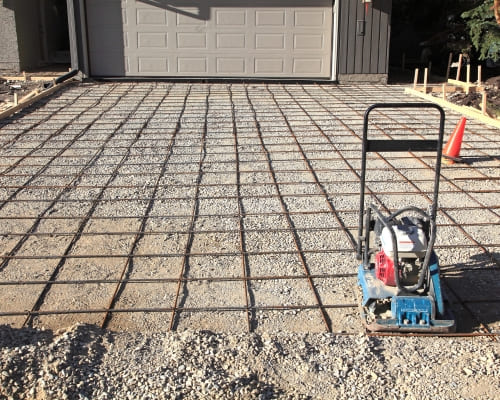
A long rural driveway is planned in sections, with joint lines and pour breaks set to suit its length, and with access for concrete trucks or a pump to the far end. Driveways that will carry trucks, horse floats or machinery are designed thicker and more heavily reinforced than suburban driveways. Many owners use concrete for the steep or turning sections and near the house, where gravel performs worst and is seen most, and keep gravel on flat straight runs to manage cost.
Rural crossovers and gravel-to-concrete upgrades
The crossover where a rural driveway meets the road needs a permit from Frankston City Council and must suit the road edge, which on rural roads is often an open table drain rather than a kerb, so a culvert pipe may be needed under the crossover to keep the drain flowing. Upgrading a gravel driveway to concrete starts with removing loose material and building a properly compacted crushed rock base. The concrete driveways page covers driveway thickness, mesh and joints in detail.
SERVICES WE OFFER IN Langwarrin South
Shed, Machinery and Tank Slabs on Langwarrin South Acreage
Langwarrin South's acreage properties need slabs that suburban blocks rarely do: large machinery sheds and workshops, stables and animal shelters, hay sheds and water tank pads. Each is designed for what it carries, from tractors and trucks to the weight of a full tank, and for the clay soil that is common across the area. Getting the base and reinforcement right matters more on these slabs, because a crack in a machinery shed floor is expensive to repair once equipment is inside.
Machinery shed and workshop slabs
Machinery sheds and workshops carry tractors, trucks, trailers and heavy equipment, so their slabs are thicker and more heavily reinforced than a house slab, with thickened edges under the walls and footings or anchor points for the steel frame. The slab is laid with a slight fall toward the doors so water and wash-down run out, and joints are placed to suit the building layout. Access for concrete trucks across the property is planned before the pour.
Stables, animal shelters and yard slabs
Stable floors, wash bays, feed rooms and animal shelter slabs need a durable, easy-to-clean surface with good grip for animals and a fall to drains so urine and wash water run away. A textured or broomed finish is used rather than a smooth one, and wash bays are graded to a drain. Yard slabs around sheds and stables give a firm, mud-free surface in wet winters where vehicles and animals move.
Water tank slabs
Most Langwarrin South properties rely on rainwater tanks, and a full tank weighs a great deal. Tank slabs are built level on a compacted base, reinforced and sized slightly larger than the tank, so it sits evenly and does not settle and strain its outlets and pipework. On clay, the base preparation and drainage around the slab keep it stable through wet and dry seasons. The slabs and footings page explains slab design for different loads.
Why choose us in Langwarrin South
Resurfacing, Repairs, Sealing and Exposed Aggregate in Langwarrin South
Closer to the house, Langwarrin South concrete work looks more like a suburban job, with the focus on appearance as well as durability. Older driveways and paths around the home are resurfaced or repaired, long driveways are sealed to protect them, and new areas near the house are often finished in exposed aggregate for a better look where visitors arrive. Treating the area around the house differently from the working parts of the property is a sensible way to spend on finish where it is seen.
Resurfacing a sound older driveway
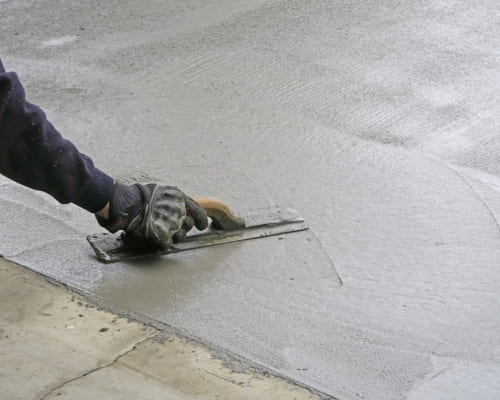
An older concrete driveway that is level and stable but faded and stained can be resurfaced with a bonded cement overlay instead of being replaced, which is a large saving on a long driveway where demolition and removal are slow. Resurfacing only suits slabs that are not moving, so cracks are checked for seasonal movement on Langwarrin South's clay before it is recommended. The concrete resurfacing page explains the overlay systems.
Repairing cracked rural driveways
Rural driveways crack where heavy vehicles turn, where the edges are unsupported, and where clay moves under them. Stable cracks are routed and sealed to keep water out of the base, broken edges are cut back and rebuilt, and sections that have sunk or broken up are cut out and re-poured on a recompacted base. Supporting the edges of a long driveway with a firm shoulder helps stop the same damage returning.
Sealing long driveways in Langwarrin South
Sealing protects a long driveway from water soaking into the surface and the base, from oil and fuel spills from machinery, and from the staining of mud and leaves. A penetrating sealer suits plain concrete driveways and leaves a natural look, while decorative areas near the house are sealed with a colour-enhancing sealer. Resealing every few years keeps the protection working.
Exposed aggregate where it is seen most
Many owners choose exposed aggregate for the parts of the property seen most, such as the last stretch of driveway, the turning circle in front of the house, entry paths and outdoor living areas. It gives a textured, attractive surface with good grip that hides dirt from farm vehicles well. Stone blends are compared at the property so the finish suits the house and the landscape.
SERVICES WE OFFER IN Langwarrin South
Concrete on Langwarrin South's Clay, Slopes and Rural Drainage
Langwarrin South's ground and layout bring three challenges for concrete: reactive clay that moves with the seasons, undulating land with slopes and gullies, and large blocks where water has no kerb and channel to run into. Each is checked on site and allowed for in the design, because a slab that suits a suburban block can crack, wash out or settle on rural land if it is built the same way. Planning for them early keeps rural concrete sound for decades.
Soil tests on reactive clay
Much of Langwarrin South sits on heavier soils and clay that swell in wet winters and shrink in dry summers. For structural slabs such as sheds, garages, studios and houses, a soil test sets the site classification and the engineer designs the slab and footings to suit it, with deeper edge beams on more reactive sites. Driveways and yard slabs are reinforced and jointed for clay so any cracking follows planned lines.
Stormwater on large blocks without kerb and channel
On rural properties, rainwater from roofs, driveways and slabs has to be managed on the block itself. Driveways are laid with crossfalls or a crown that sheds water to the sides, with spoon drains or swales alongside long runs and culverts where a driveway crosses a drainage line. Shed and stable slabs are graded so water runs away from them, and downpipes are directed to tanks or drains rather than onto the ground beside a slab.
Truck and pump access on long tracks
Getting concrete to a slab at the back of a large property can be the hardest part of a rural job. Concrete trucks are heavy and need a firm track to drive on, especially after rain, so access routes are checked at the quote stage. Where the truck cannot reach, a concrete pump with a long boom or line is used. Pours on long driveways are planned so trucks can turn and return without damaging finished sections.
Why choose us in Langwarrin South
Green Wedge Controls, Permits and Engineering for Rural Slabs
Building on rural land in Langwarrin South involves more paperwork than a suburban job. Parts of the area sit within the green wedge, where Frankston's planning scheme limits subdivision and controls what can be built, and larger sheds, studios and outbuildings usually need a building permit and an engineered slab. Sorting out the approvals before work starts avoids delays and the cost of altering a slab that was poured without them.
Building permits for sheds and outbuildings
In Victoria, larger sheds, garages, stables and other outbuildings generally need a building permit from a registered building surveyor, while some small garden sheds can be exempt depending on size and siting. Where a permit applies, the slab and footings are designed by an engineer from a soil test, and the surveyor inspects the steel before the concrete is poured. The quote allows for the inspection in the schedule so the pour is not delayed.
Planning controls in the green wedge
Parts of Langwarrin South fall within the green wedge and rural zones, where planning controls can affect the size, siting and use of new buildings and earthworks. Owners planning a large shed, a second dwelling or significant earthworks are advised to check with Frankston City Council early, because a planning permit may be needed before a building permit can be issued. The concrete work is scheduled once those approvals are in place.
SERVICES WE OFFER IN Langwarrin South
How Rural Concrete Jobs Are Quoted in Langwarrin South
Rural concrete jobs have more variables than suburban ones: long distances, truck access across paddocks and tracks, heavier loads, slopes, drainage and sometimes approvals. Peak Concreting Frankston walks the property before pricing, so every one of those is in the quote rather than discovered on the day. That matters most on long driveways and large shed slabs, where a small change in thickness or access makes a large difference to the total.
A fixed written quote after an on-site look
The site visit measures the driveway or slab, checks the soil, the slope and where water runs, confirms truck and pump access, and identifies any crossover, culvert, permit or engineering requirements. The result is a fixed written quote that lists earthworks, base, reinforcement, drainage, finish and sealing separately, along with any pump hire, so it can be compared line by line and there are no extras added once the trucks are booked.
What rural concrete costs in Langwarrin South
Large rural slabs and long driveways often cost less per square metre than small suburban jobs, because setup is spread over a bigger area, but heavier specifications for trucks and machinery, longer access and pump hire add to the total. As a relative guide, plain broomed concrete is the most economical finish for working areas, exposed aggregate costs more near the house, and resurfacing a sound driveway costs considerably less than replacing it. A firm price follows the site visit.
Why choose us in Langwarrin South
Langwarrin South Roads Covered, Robinsons Road to Golf Links Road
Peak Concreting Frankston works across all of Langwarrin South, which is bounded by Robinsons Road to the north, the Dandenong-Hastings Road to the east and Golf Links Road and Baxter-Tooradin Road to the south. Its properties range from lifestyle blocks close to Langwarrin to larger acreage further south and east, connected by rural roads where driveways run long and crossovers meet open drains rather than kerbs, and where each property brings its own access and ground.
Around Mulberry Hill and Woodleigh School
Work regularly takes in the properties along Golf Links Road, home to Mulberry Hill, the former home of Daryl and Joan Lindsay now cared for by the National Trust, and the roads around Woodleigh School. Properties in these parts of Langwarrin South tend to be larger, with long driveways, outbuildings and established trees, so driveway, shed and drainage work makes up most of the jobs here.
Where Langwarrin South meets Langwarrin, Pearcedale, Baxter and Frankston South
Langwarrin South borders Langwarrin, Frankston, Frankston South, Pearcedale and Baxter. Jobs here often run alongside work in Langwarrin and Frankston South, which share its inland clay soils, so travel adds nothing to the price. The same crew, the same fixed written quotes and the same standards apply on every property, from a small tank pad to a long driveway from the gate to the house.
concreting Services we offer In Langwarrin South
Plain, exposed aggregate and coloured concrete driveways built on a compacted base with steel reinforcement and planned joints, so the driveway carries its load and resists cracking for decades. Fixed written quotes.
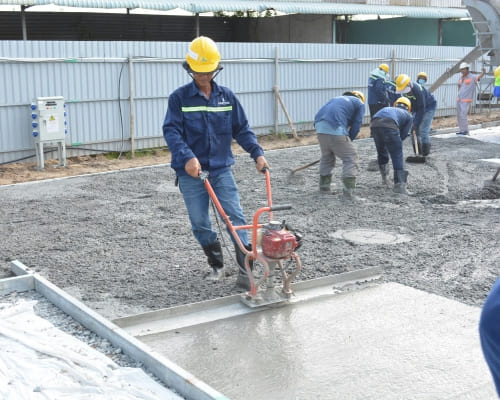
House, shed, garage and extension slabs, plus the footings that carry them, designed to the site's soil classification and poured with the right reinforcement and vapour barrier. Fixed written quotes.

Textured, slip-resistant exposed aggregate driveways, paths, patios and pool surrounds, washed back to reveal the stone and sealed to hold its colour. Stone blends compared on site and fixed written quotes.
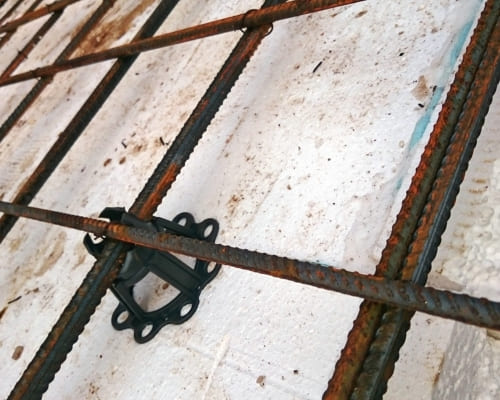
Front paths, side access, footpaths and garden walkways built on a compacted base with mesh, the right fall for drainage and a broomed or decorative finish. Fixed written quotes and tidy work.
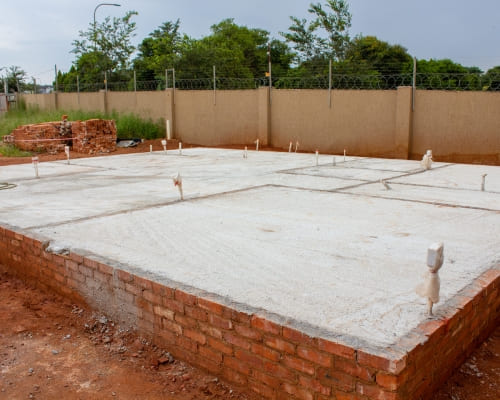
Garden edging, mower strips, driveway kerbs and car park kerbing, formed in one continuous line on a proper base so it will not rot, lift or rust like timber or plastic. Priced per lineal metre.
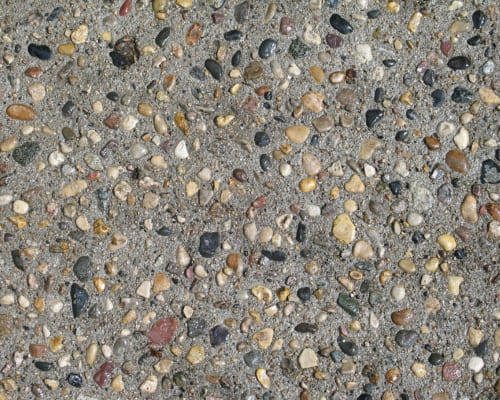
Crack, spalling, concrete cancer and sunken-slab repairs, with the cause found first and an honest call on repair, resurface or replace. Fixed written quotes for repairs that last.
Concrete sleeper, core-filled block, poured and panel retaining walls with footings, steel and drainage sized to the height and the soil behind them. Fixed written quotes for walls built to hold the slope.
Ground and polished concrete floors for homes, garages and small commercial spaces, from a cream finish to full stone exposure and matte to high gloss. Fixed written quotes and an even, consistent sheen.
Sealing for driveways, paths, exposed aggregate and decorative concrete, with the right sealer applied over a properly prepared surface to resist oil, stains, water, salt and fading. Honest resealing advice.
A tired but sound slab given a new surface with a bonded overlay, finished spray-on, stencilled or trowelled in a choice of colour, for a fraction of the cost of replacement. Fixed written quotes.
Coloured concrete driveways, paths and outdoor areas tinted through the mix in charcoal, grey, sandstone or terracotta tones to suit the home, then sealed to protect the colour. Fixed written quotes.
Honed concrete for alfresco areas, pool surrounds and entries, ground to a smooth, stone-like matte finish and sealed with an anti-slip additive so it keeps its grip outdoors. Fixed written quotes.
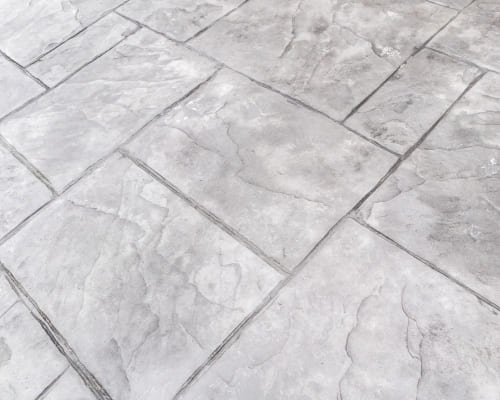
Stamped concrete driveways, patios and pool surrounds with the look of slate, stone, brick or timber pressed into a coloured pour, in one continuous slab with no gaps for weeds. Patterns shown on site.
concreting In Langwarrin South
FREQUENTLY ASKED QUESTIONS
Everything you need to know about our concreting In Langwarrin South
Is Langwarrin South within the service area?
Yes. All of Langwarrin South is covered, from Robinsons Road to Golf Links Road and the Dandenong-Hastings Road, with no extra charge for travel. Jobs range from water tank pads and stable floors to long driveways and machinery shed slabs.
Can a long gravel driveway be concreted in stages?
Yes. Many rural owners concrete the most important sections first, such as steep stretches, turning areas and the section near the house, and extend later. Each stage is built on a compacted base with a planned joint where the next section will join, so the driveway looks and performs as one when it is finished.
Does a rural crossover need a culvert?
Often it does. Where a driveway crosses an open roadside drain rather than a kerb, a culvert pipe is usually needed under the crossover so the drain keeps flowing. The crossover needs a permit from Frankston City Council, which sets the requirements for the pipe and the crossover itself.
Is concrete better than asphalt for a long rural driveway?
Asphalt usually costs less to lay over a long distance and copes with minor movement, but it softens in summer heat, ruts under heavy vehicles and needs resealing every few years. Concrete costs more up front but lasts longer, handles heavy machinery and floats better and needs less upkeep. Many owners use concrete near the house and on slopes.
How thick should a machinery shed slab be?
It depends on the vehicles and equipment it will carry and the soil class. Machinery and truck slabs are thicker and more heavily reinforced than a house or garage floor, with thickened edges under the walls. Where a permit applies, the engineer's design sets the thickness and reinforcement.
How long does a long rural driveway take to concrete?
It depends on the length, the access and whether the old surface has to be removed. A long driveway is usually prepared in one block of work and poured in planned sections over several days, with cars and trucks kept off each section for around a week while it gains strength.
TESTIMONIALS
What Langwarrin South Homeowners Say About Us
Request A Free Quote
BUSINESS
SERVICES
OPERATING HOURS
Sun: 7:00am - 9:00pm
Mon: 7:00am - 9:00pm
Tue: 7:00am - 9:00pm
Wed: 7:00am - 9:00pm
Thu: 7:00am - 9:00pm
Fri: 7:00am - 9:00pm
Sat: 7:00am - 9:00pm